Advancing Diversity, Equity, and Inclusion through Mentorship and Student Support at the 2024 IFAC Workshop on Cyber-Physical-Human Systems (CPHS’24)
Project Lead: Dr. K. Merve Dogan, Embry-Riddle Aeronautical University (ERAU), USA; dogank@erau.edu
IFAC Sponsor: TC9.2 Systems and Control for Societal Impact
The primary objective of this activity was to broaden participation and foster an inclusive research environment at the CPHS’24 held on December 12–13, 2024, in Antalya, Türkiye (https://www.cphs2024.org/home ). The activity focused on advancing DEI through targeted student and early-career researcher support, structured mentorship, and inclusive professional programming aligned with IFAC’s mission to promote societal impact in control and systems engineering.
Student and Early-Career Researcher Support (https://www.cphs2024.org/travel-support)
IFAC Activity Funds (€4,540) were used to provide direct travel and registration support for 12 students and 2 early-career researchers from Europe, Türkiye, and the United States. Support covered conference registration fees and the cost of a two- or three-night hotel stay, with shared accommodations offered as an option. The recipients were primarily students and early-career researchers from historically underrepresented groups.
Although the original budget projected support for approximately 4–6 students and 3–5 early-career researchers, the final number of supported student participants exceeded expectations. This was made possible by lower-than-anticipated hotel costs, variable registration fees for local and non-local participants (https://www.cphs2024.org/registration), and the inclusion of meals within the hotel accommodations. The budget was adjusted accordingly to maximize the number of supported attendees while remaining within the approved funding amount. All allocated IFAC funds were fully expended and used exclusively for student/early career researcher lodging and registration costs.
Orientation and Accessibility Support
To enhance accessibility and inclusion, a CPHS’24 Conference Field Guide (https://drive.google.com/file/d/1OqiNLpBFXoVGO7E3lovKiar_7UjzjM-w/view?usp=sharing) was developed and distributed to all attendees prior to the workshop. The guide highlighted key technical sessions, DEI-related events, accessibility resources, and practical networking strategies, with the goal of lowering barriers to participation, particularly for first-time conference attendees.
In addition, on-site daily orientation sessions were conducted to help students and early-career researchers navigate the conference structure, identify relevant sessions, and connect with mentors and peers. These sessions were particularly beneficial for international participants and those new to the IFAC community.
Women in CPHS Panel (https://www.cphs2024.org/program/women-in-cphs-panel)
A central component of the DEI programming was the Women in CPHS Panel, a highly attended and well-received session open to all conference participants. The panel featured leaders from academia and industry:
- Prof. Anuradha Annaswamy (Massachusetts Institute of Technology),
- Prof. Sandra Hirche (Technical University of Munich), and
- Raziye Tekin (Vice-Chair for Industry, Roketsan A.Ş.).
The discussion addressed career pathways, leadership, challenges faced by underrepresented groups, and strategies for fostering inclusive research and professional environments in CPS. The panel provided valuable role-model visibility and facilitated open dialogue across career stages and sectors.
Mentorship and Professional Development
In parallel with IFAC-supported activities, a structured Fellows-Mentor Program (supported by NSF) was integrated into the workshop. Fellows were matched with senior researchers and mentors outside their home institutions, and were encouraged to meet before, during, and after the conference. IFAC-supported travel enabled Fellows to fully participate in this program and benefit from sustained mentoring interactions.
A Professional Development Poster Session was also organized, providing 11 students with the opportunity to present their work and receive feedback on research directions, graduate studies, and career planning. The session served both students seeking academic positions and those exploring industry or graduate education pathways.
Community-Building and Broader Impact
Planned social events, including coffee breaks and informal gatherings, were used as intentional networking opportunities to promote integration of students and early-career researchers into the CPHS community. These activities strengthened professional connections and encouraged cross-disciplinary interaction among participants from control, robotics, human-computer interaction, neuroscience, and industry.
Overall, the activity significantly broadened participation at CPHS’24, which hosted 153 participants from 18 countries, including 62 students and early-career researchers and 38 women. The DEI-focused programming contributed to a welcoming and inclusive workshop environment and strengthened the early integration of underrepresented researchers into the CPS and CPHS communities.
At both the disciplinary and societal levels, the activity advanced IFAC’s goals by promoting equitable access, fostering mentorship, and supporting the next generation of researchers working at the intersection of control, autonomy, and human-centered systems.
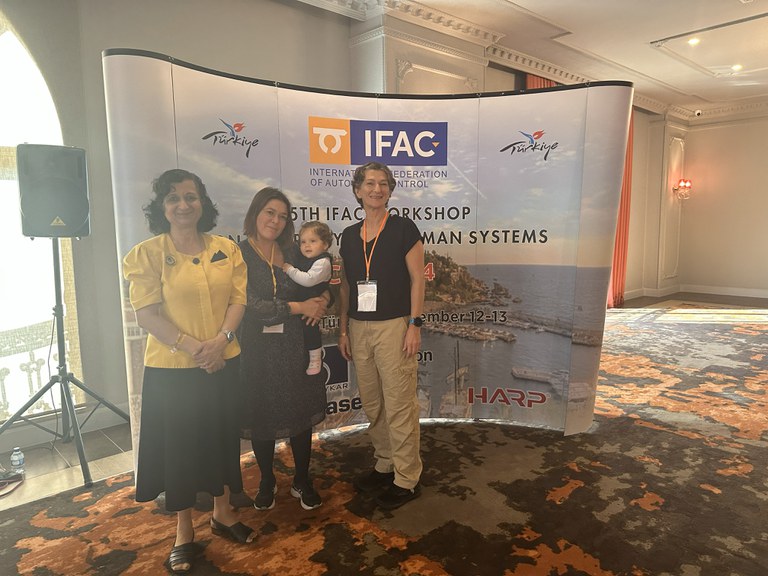
Women in CPHS Panel Panelists (from left to right Sandra Hirche, Raziye Tekin, Anuradha Annaswamy)
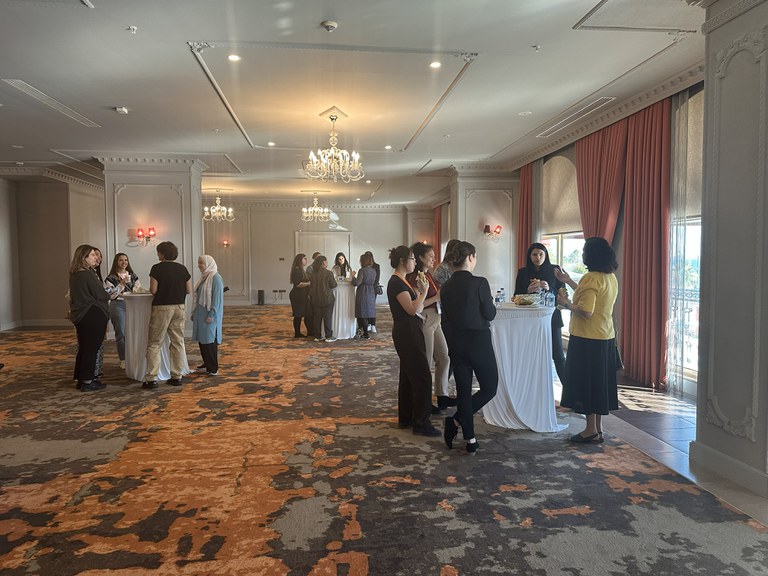
Women in CPHS Meeting (with some of the travel awardees)
